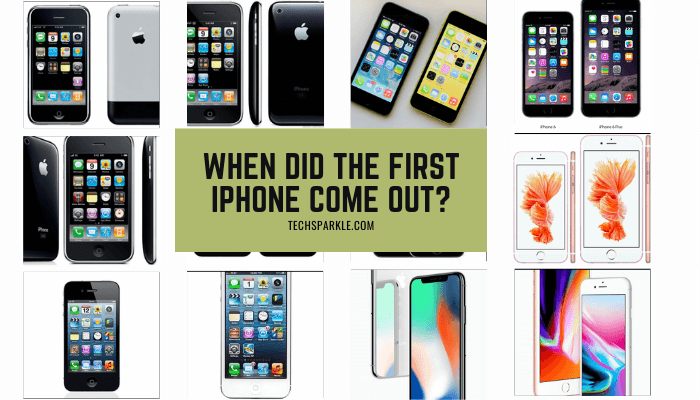
The Genesis: When Steve Jobs Unveiled the Future
The tech world, as we know it today, was irrevocably changed on a single, pivotal day. So, when did the first iPhone come out? While many might instantly recall the device's revolutionary impact, pinpointing the exact moment of its birth often requires a trip down memory lane. The original iPhone wasn't just a new phone; it was a paradigm shift, unveiled by Steve Jobs himself, that set the stage for the mobile computing era we now inhabit.
A Glimpse into the Past: January 9, 2007
The journey began not with a product launch, but with an announcement. On January 9, 2007, at Macworld in San Francisco, a confident Steve Jobs stood before an eager audience and declared, "Today, Apple is going to reinvent the phone." He famously introduced the iPhone as "three revolutionary products in one device." First, a widescreen iPod with touch controls; second, a revolutionary mobile phone; and third, a breakthrough internet communications device. The device he showcased was sleek, button-minimal, and boasted an entirely new way to interact with technology – multi-touch.
This presentation wasn't just about specs and features; it was a masterclass in marketing and vision. Jobs didn't just show a phone; he demonstrated a future where physical keyboards were obsolete, where internet browsing felt natural on a handheld device, and where software experience took precedence. The anticipation built during this period was immense, as the world waited to get its hands on this promised revolution.
The Grand Entrance: June 29, 2007
While the world knew about the iPhone in January, it wasn't until June 29, 2007, that the public could finally purchase it. On this momentous Friday, queues formed outside Apple Stores across the United States, reminiscent of major movie premieres or console launches. Consumers were eager to be among the first to experience what Jobs had so eloquently described. The initial release was exclusive to the U.S. market, with international availability following in subsequent months and years.
The first-generation iPhone, often referred to as the "iPhone 2G" or "original iPhone," launched with a limited set of features compared to today's standards. It ran on what would later be named iOS (then simply "iPhone OS"), featured a 3.5-inch multi-touch display, a 2-megapixel camera, and connectivity limited to 2G EDGE networks. Despite these early limitations, its intuitive interface and innovative design immediately set it apart from the competition, laying the groundwork for more than a decade of innovation. For a deeper dive into how Apple's initial launch paved the way for future models, explore our related article: Years of Innovation: When Did Apple's First iPhone Launch?
More Than Just a Phone: Why the Original iPhone Was Revolutionary
The original iPhone didn't just introduce a new gadget; it fundamentally redefined what a smartphone could and should be. Before its arrival, mobile phones were largely utilitarian devices, often cluttered with physical buttons and navigating clunky software. The iPhone challenged every convention.
Goodbye Buttons, Hello Multi-Touch
Perhaps the most defining characteristic of the first iPhone was its embrace of a large, capacitive multi-touch screen and the virtual keyboard. While other devices had touchscreens, Apple's implementation was fluid, responsive, and incredibly intuitive. Pinch-to-zoom, swipe gestures, and tap navigation felt natural and futuristic. This paradigm shift liberated the phone's front face from a crowded keyboard, allowing for a much larger display – a concept that now dominates the entire smartphone market.
Steve Jobs' vision was to eliminate the stylus, stating, "We're going to use the best pointing device in the world: your finger." This commitment to direct, natural interaction made the iPhone instantly accessible and enjoyable, setting a new bar for user experience.
Defining the Smartphone Experience
Beyond the hardware, the iPhone's software was equally revolutionary. iPhone OS (now iOS) introduced an elegant, icon-driven interface that was easy to understand and navigate. It brought a truly capable web browser (Safari) to mobile, allowing users to experience the internet much like they would on a desktop computer. Features like visual voicemail, iTunes integration, and Google Maps with touch-based interaction were groundbreaking at the time.
It integrated entertainment, communication, and internet access into a single, cohesive experience, changing how people consumed media, communicated, and accessed information on the go. This holistic approach made it a true pocket computer rather than just a phone.
The Birth of an Ecosystem (and its Future Impact)
While the initial iPhone launch didn't include the App Store (that came with iPhone OS 2.0 in July 2008), the device's open-ended software architecture hinted at its immense potential. The subsequent introduction of the App Store transformed the iPhone from a powerful device into a limitless platform. Developers could create applications, and users could download them with ease, fueling an explosion of innovation that saw apps become integral to daily life, from social media to banking, gaming, and productivity. This app ecosystem became a core pillar of the iPhone's long-term success and influence.
The Evolution of Price and Power: From $499 to Today's Landscape
The journey from the original iPhone to today's sophisticated models isn't just a tale of technological advancement; it's also a fascinating look at evolving market strategies and pricing structures.
The Original Price Tag: A Premium for Innovation
In 2007, the first iPhone was launched at a premium price point, reflecting its groundbreaking technology. The 4GB model was priced at $499, while the 8GB version retailed for $599. These prices were for an unlocked device, though carriers like AT&T often offered subsidized plans.
Compared to feature phones of the era, this was a significant investment. However, many early adopters saw it as a worthwhile cost for a device that promised to redefine mobile computing. This established Apple's strategy of positioning the iPhone as a high-end, aspirational product.
Bridging the Gap: The iPhone SE and Mini Models
Fast forward to the present, and the iPhone lineup has diversified considerably. While flagship models like the iPhone 15 series command prices upwards of $799 or even $1,000+, Apple has strategically introduced options to make the iPhone experience more accessible.
- The iPhone SE: This series represents Apple's direct attempt to offer a powerful iPhone experience at a more budget-friendly price. Starting around $429 for the base model today (and historically, even lower at $399 when the 2nd Gen SE launched), the iPhone SE often features a classic design (complete with a Home button, reminiscent of earlier models) and the latest internal chip, offering incredible value. Interestingly, the base iPhone SE model has, at times, been priced even lower than the original iPhone's launch price in 2007, demonstrating Apple's evolving market approach.
- The iPhone 'mini' Series: Although discontinued with the iPhone 14 lineup, models like the iPhone 12 mini and 13 mini offered a smaller form factor at a slightly reduced price compared to their standard counterparts. This strategy aimed to cater to users who preferred a more compact device without sacrificing much in terms of performance.
These models showcase Apple's understanding of different market segments and their commitment to ensuring a wider range of consumers can access the iPhone ecosystem. For an in-depth exploration of how iPhone prices have shifted over the years, check out our article: From $499 to $399: The Shocking Evolution of iPhone Prices.
Beyond Cost: Unrecognizable Hardware and Software Leaps
Beyond the price and storage, the differences between the first iPhone and its modern successors are staggering. While the original iPhone was innovative for its time, today's models boast:
- Cameras: From a rudimentary 2MP fixed-focus lens to multi-lens systems with computational photography, 4K video recording, and advanced features like Night Mode and Cinematic Mode.
- Displays: The original's 3.5-inch LCD with 320x480 resolution has evolved into vibrant Super Retina XDR OLED displays, ProMotion technology, and Ceramic Shield durability.
- Processors: The leap from a single-core ARM processor to multi-core A-series chips with billions of transistors and dedicated Neural Engines is immense, enabling AI, machine learning, and console-quality gaming.
- Security: The original had a simple passcode. Modern iPhones feature advanced biometric security like Touch ID (fingerprint) and Face ID (facial recognition).
- Connectivity: From 2G EDGE to lightning-fast 5G, Wi-Fi 6E, and UWB (Ultra Wideband).
- Software: iOS has evolved from a basic operating system to a sophisticated platform with widgets, multitasking, extensive privacy controls, and a vast ecosystem of apps.
Even intriguing tidbits, like Apple skipping the iPhone 9 in its numerical sequence (going from iPhone 8 to iPhone X for its tenth-anniversary edition), highlight the company's bold and often unconventional approach to product iteration.
Apple's Enduring Legacy and the Path Forward
More than a decade and a half after its initial debut, the iPhone remains a dominant force in the global technology landscape. Its impact continues to resonate, shaping not just how we communicate, but how we live, work, and play.
A Decade of Dominance and Disruption
The iPhone's consistent innovation has kept it at the forefront of the smartphone market. Each generation brings improvements in performance, camera technology, battery life, and software features. This relentless pursuit of enhancement has allowed Apple to maintain a premium brand image and a fiercely loyal customer base. The iPhone didn't just compete in the phone market; it created the modern smartphone market.
The iPhone's Ripple Effect on Tech
The influence of the iPhone extends far beyond Apple's own product line. Its success directly inspired the development of rival operating systems like Android and pushed other manufacturers to innovate rapidly. It fostered the growth of entire industries, from app development to mobile accessories and digital services. The concept of a pocket-sized computer with a powerful touchscreen and vast app ecosystem is a direct legacy of the original iPhone.
Conclusion
To answer "when did the first iPhone come out?" is to mark not just a date, but a turning point in technological history. Announced on January 9, 2007, and released to the public on June 29, 2007, the original iPhone was far more than a new device; it was a bold statement about the future of personal technology. From its innovative multi-touch interface and intuitive software to its premium pricing and eventual ecosystem dominance, the iPhone fundamentally reshaped the mobile industry. Its journey from a $499 device to a diverse product line featuring both cutting-edge flagships and value-driven options like the iPhone SE underscores Apple's enduring commitment to innovation and its unparalleled ability to captivate the global market.